

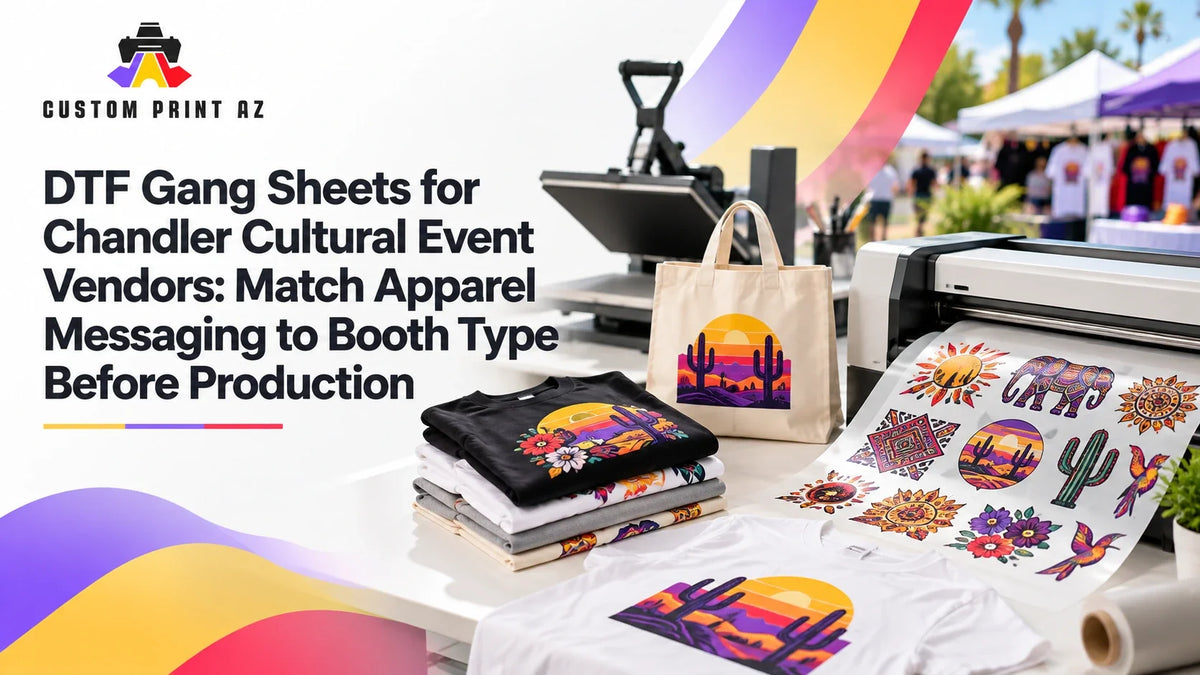
An event apparel design can have the correct logo, approved colors, and technically clean artwork and still communicate the wrong message. The problem is not always design quality. Sometimes the artwork simply does not match what the team will actually be doing at the event.
The same organization might sell merchandise at one event, provide information at another, or participate as part of a community outreach program. The organization identity may remain the same while the purpose of its visitor-facing messaging changes. That is why event-specific artwork placed on a DTF gang sheet should be reviewed for more than visual approval. Before production, ask one additional question: Does this artwork accurately reflect what this booth or team will actually be doing at this event?
Chandler provides a useful local example. The City of Chandler's Multicultural Festival vendor information separates merchandise vendors, informational/nonprofit booths, and cultural performers into different participation types. Chandler Contigo uses a similar distinction between merchandise vendors, informational/nonprofit booths, and performers. Those official categories do not prescribe what anyone should print on a shirt. They do, however, demonstrate that participants at the same cultural event can serve very different functions.
Confirm the Booth Type Before Reviewing the Apparel Message
A common artwork-review mistake is to start with the design file itself. Is the logo correct? Is the copy readable? Are the colors approved? Is the file marked final?
Those checks matter, but they do not answer whether the artwork fits the current use. If the team’s actual participation type has not been confirmed, a visually correct design can still carry wording that belongs to a different event role.
Before treating the artwork as production-ready, clarify the event context:
- What will this team actually be doing at the event?
- Will it be selling merchandise?
- Will it primarily provide information about an organization or program?
- What kind of interaction will visitors have with the team?
- Is the apparel only identifying staff, or is it also carrying a visitor-facing message?
These answers create the context needed to review the wording. Without them, secondary copy can easily be carried forward from a previous event simply because the artwork already exists.
Separate Organization Identity From Booth-Purpose Messaging
An apparel design can contain two different layers of information.
The first is the organization’s core identity: its approved logo, wordmark, or customer-facing name. The second is messaging connected to a specific use case.
For example, the same company logo may appear at several events. A phrase such as “Shop Our Products,” “Ask Us About Our Program,” or “Volunteer Information,” however, may make sense only in a particular participation context.
The goal is not to decide which slogan sounds better. The production question is narrower:
Is this wording part of the organization’s core identity, or does it exist specifically because of this booth function?
Making that distinction prevents a message from another event use from being treated as if it were a permanent part of the brand artwork.
Define the Expected Visitor Interaction
One practical way to test apparel messaging is to think about how visitors are expected to interact with the booth.
For a merchandise vendor, the interaction may involve browsing or purchasing products. At an informational or nonprofit booth, the interaction may instead involve learning about an organization, receiving handouts, discussing a program, or being directed toward additional information.
This does not mean every shirt needs a call to action. In many cases, apparel only needs to help visitors identify staff members. The point is that when a visitor-facing message is included, it should not contradict the booth’s actual purpose.
For example, if a team is participating in an information-only context, sales-oriented copy carried over from a previous merchandise event may no longer fit the current use even if the organization logo remains completely correct.
Previously Approved Artwork Is Not Automatically Approved for This Event
An artwork file that has already been printed successfully can still be wrong for a new event.
The organization may be the same. The logo may be unchanged. The garment placement may also remain the same. But if the participation type changes, any secondary message should be reviewed again.
When selecting artwork for a new event, consider:
- Which event or booth type was this artwork originally created for?
- Does it contain secondary messaging?
- Does that message still fit the current participation type?
- Should only the organization identity be retained for the new use?
- If new wording was approved, has the previous version been separated from the active production set?
If the artwork needs to change, use an appropriate artwork revision and change-control workflow so the previous and current versions do not become interchangeable during production.
Do Not Turn the Event Application Category Into Shirt Copy
An event application or vendor category is useful operational information, but it is not ready-made apparel copy.
For example, an official event may classify a participant as an “Informational/Nonprofit Booth.” That description helps identify what kind of participation is taking place. It does not mean those exact words belong on the shirt.
The same is true for a “Merchandise Vendor” classification. Being assigned to a merchandise category does not automatically mean the apparel needs a sales message.
Instead, use the participation category as an input in the review process:
- Confirm the participation type.
- Define the actual booth purpose.
- Clarify the expected visitor interaction.
- Decide whether the apparel only needs identification or also needs messaging.
- If secondary messaging is included, approve it specifically for the current use.
This prevents administrative event terminology from being confused with visitor-facing apparel copy.
One Organization Can Have Several Similar Message Versions
An organization that participates in different event formats may eventually accumulate several apparel variations built around the same logo.
One version may have been prepared for a merchandise booth, another for an informational booth, and another may contain only staff identification. Because the logo, colors, and overall visual style can remain nearly identical, the versions may look almost the same when viewed as small thumbnails.
In that situation, “Which file is newer?” is not always the most useful production question.
A better question is:
Which version was approved for this participation type?
The current production set should make that distinction clear. Artwork from another event or another participation context does not have to be deleted, but it should not be left indistinguishable from the version approved for the current job.
If Function-Specific Messaging Is Not Needed, Do Not Force It
Not every event apparel design needs function-specific wording.
In some cases, an approved organization logo or identity may be enough to identify the team. There is no automatic requirement to create a new shirt message simply because the organization is participating in a different booth category.
The useful distinction is whether the current artwork actually contains language tied to a specific function.
If the design contains only organization identity, the messaging review is relatively simple. If it contains additional wording tied to a particular booth purpose, that wording should be checked against the current event context.
This is not a system for classifying every design as reusable or event-specific. It is simply a way to determine whether the message inside the current production job matches its intended use.
Recheck Message Scope on the Final Gang Sheet
Even when the correct source artwork has been selected, similar versions can still be mixed during layout. That makes a final context check useful after the gang sheet has been assembled.
For artwork that contains event-specific messaging, review the final composite and ask:
- Is the correct organization artwork present?
- Is the correct booth-function version being used?
- Is there any secondary message left over from another event or participation type?
- If both identification-only and message-bearing artwork appear on the sheet, is that intentional?
- Does the final gang sheet match the artwork set approved for this event use?
This is not a copywriting review. It is a production-context check designed to confirm that the final layout contains the artwork intended for the current job.
Reopen the Message Check if the Booth Function Changes
Event plans can change before production. An organization may initially expect to participate as a merchandise vendor and later move into a different format, or the responsibilities of the staff team may change.
That does not automatically mean new apparel is required.
If the existing artwork contains only the organization identity, no messaging revision may be necessary. But if the design contains wording tied to the previous booth function, the production release should be reviewed again.
The useful approach is to revisit only the part of the artwork affected by the change. Instead of redesigning the entire shirt whenever an event detail changes, review the message layer that actually depends on the participation type.
Use a Short Booth-Message Check Before Production
- Confirm the final event participation type.
- Describe the booth's actual function in one sentence.
- Determine whether the apparel is for identification, messaging, or both.
- Separate organization identity from event-specific secondary copy.
- Confirm that the secondary message fits the current booth function.
- Separate versions created for other events or participation types from the active production set.
- If a revision was made, confirm that the correct final version is in the production folder.
- After the gang sheet is assembled, check the artwork-to-function match one more time.
Once the current-use artwork has been confirmed, the approved files can move to the DTF gang sheet upload step when appropriate.
Frequently Asked Questions
Does every booth type need different apparel artwork?
No. The same organization identity can work across multiple event uses. A separate artwork version becomes more relevant when secondary messaging is specifically tied to one booth function.
Does the City of Chandler require specific wording on shirts for different booth types?
The City of Chandler sources used here distinguish participation types such as merchandise vendors, informational/nonprofit booths, and performers. They do not establish specific apparel wording requirements. The message-alignment workflow in this article is a production-planning approach.
Should an old sales message automatically be used at an informational booth?
No. It should be reviewed against the current participation context. The City of Chandler's Multicultural Festival information describes informational/nonprofit booths as providing information or handouts without sales or solicitation, so sales-oriented wording from a different use should not automatically be treated as current artwork.
Is this workflow necessary if the shirt only contains a logo?
The review is simpler in that case. If the apparel contains only an approved organization identity and no function-specific wording, the messaging-scope risk is lower. The team should still confirm that the correct artwork version is being used.
If the booth function changes late, does the entire gang sheet need to be rebuilt?
Not always. If the change only affects secondary messaging, only the relevant artwork variation may need to be reviewed or replaced. The final production set should reflect the actual event use.
Send the Right Message Into Production
Production readiness for cultural-event apparel is not only about using the correct logo. When an artwork file contains visitor-facing wording, that wording should also fit what the team will actually be doing at the event.
Confirm the participation type first, then define the booth purpose. Separate core organization identity from event-specific messaging, review the current-use variation, and check the final gang sheet before release.
This does not make event apparel more complicated. It simply makes the scope of each message clearer and reduces the chance that wording created for one event function will accidentally move into a different Chandler event use.


