

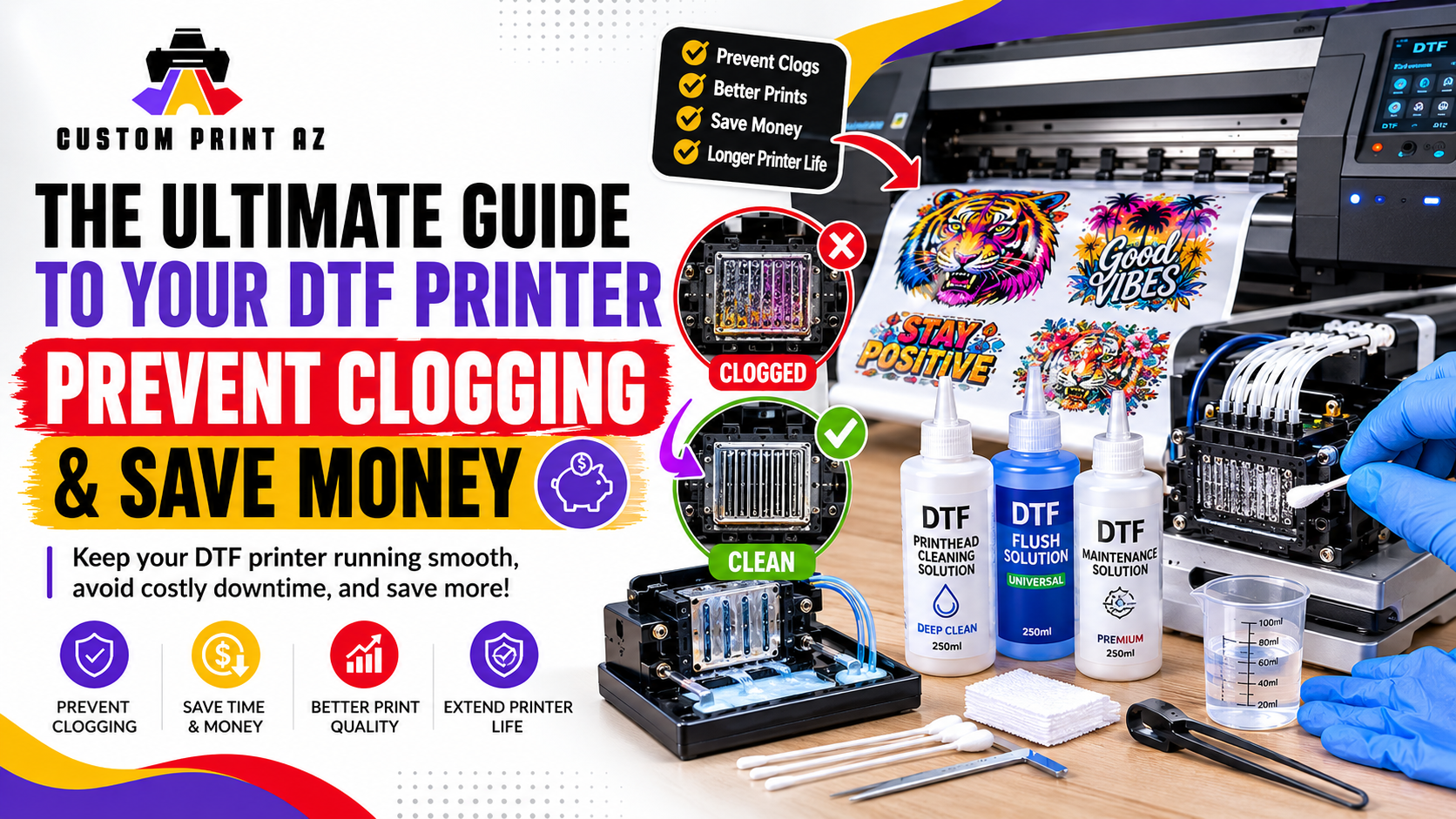
The Ultimate Guide to Your DTF Printer: Prevent Clogging & Save Money
Direct-to-Film printing continues to grow across the custom apparel industry. Businesses choose DTF because it delivers vibrant colors, excellent durability, and compatibility with a wide range of fabrics. However, even the best DTF printer can experience problems if maintenance is ignored. One of the most common and expensive issues is printhead clogging.
A clogged printhead can affect production quality. It can delay customer orders. It can increase ink waste. In some situations, it can even lead to expensive repairs or complete printhead replacement. Understanding how to prevent clogs is one of the most important skills a DTF printer owner can develop.
This guide explains why clogging occurs, how proper maintenance protects your investment, and what steps you can take to save money while improving print quality.
For additional maintenance recommendations, read our complete DTF Printer Maintenance Guide .
Understanding How a DTF Printer Works
Before discussing maintenance, it helps to understand how a DTF printer operates. DTF printing involves printing a design onto PET film using specialized inks. Adhesive powder is then applied and cured. Finally, the design is transferred onto a garment using heat and pressure.
The printhead plays a critical role in this process. It delivers microscopic droplets of ink with extreme accuracy. Because these droplets are so small, even minor contamination can affect print quality.
If pigment particles begin to accumulate inside the nozzle channels, ink flow becomes restricted. This is the beginning of most clogging issues.
Why DTF Printheads Become Clogged
Printhead clogging does not usually happen overnight. Most clogs develop gradually. Small maintenance mistakes build up over time until print quality begins to suffer.
White Ink Sedimentation
White ink is one of the main causes of nozzle blockages. It contains titanium dioxide. This pigment is heavier than other colors and naturally settles over time. Without proper circulation, the pigment can collect inside the ink system.
Dry Environmental Conditions
Low humidity increases ink evaporation. When ink dries too quickly, residue can form inside the printhead. This residue eventually restricts nozzle performance.
Long Periods of Inactivity
DTF printers perform best when used consistently. Leaving a printer idle for several days allows ink to settle and dry. This significantly increases clogging risk.
Poor Maintenance Habits
Neglecting nozzle checks, cleaning routines, and circulation systems often leads to preventable problems.
The Hidden Cost of Printer Neglect
Many operators focus only on ink expenses. However, poor maintenance often costs much more than the ink itself.
A clogged printhead can create production delays. Reprints become necessary. Customer deadlines become harder to meet. Lost productivity can quickly exceed the cost of regular maintenance.
In severe situations, replacing a printhead can cost hundreds or even thousands of dollars. That expense is often avoidable.
Daily Maintenance Tasks That Protect Your Investment
Consistency is the secret to long-term printer reliability. Small daily habits create major savings over time.
Perform a Nozzle Check
Start every production day with a nozzle test. This allows you to identify missing channels before beginning customer jobs.
Verify White Ink Circulation
Check that white ink is circulating correctly. Proper circulation prevents pigment from settling inside the system.
Inspect the Capping Station
The capping station protects the printhead when the printer is not operating. Keeping this area clean improves nozzle health.
Print Something Every Day
Even a small test print helps maintain healthy ink flow. Consistent activity reduces the likelihood of dried ink buildup.
Weekly Maintenance Procedures
Weekly maintenance focuses on deeper cleaning and inspection tasks.
- Inspect dampers.
- Check ink lines.
- Clean wiper blades.
- Remove excess ink buildup.
- Review print quality performance.
- Verify environmental conditions.
These procedures require little time but provide significant long-term benefits.
How Humidity Affects Print Quality
Humidity is often overlooked. Yet it plays a major role in printer health.
Most DTF systems perform best between 45% and 65% humidity. When humidity falls below this range, ink dries faster. Dry ink increases the likelihood of clogged nozzles.
Using a humidifier can help stabilize the environment. This simple investment often reduces maintenance costs dramatically.
The Importance of High-Quality DTF Ink
Not all inks are manufactured to the same standard. Premium inks provide better stability and more consistent particle sizes.
Low-quality inks may appear cheaper initially. However, they often increase maintenance requirements and shorten printhead lifespan.
Using reliable ink products is one of the simplest ways to reduce long-term operating expenses.
Why Cleaning Solutions Matter
A quality printhead cleaning solution helps dissolve dried ink and remove pigment buildup before it becomes severe.
Cleaning solutions should be used according to manufacturer recommendations. Over-cleaning can waste ink. Under-cleaning can allow clogs to develop.
Finding the right balance is essential.
How Proper Maintenance Saves Money
Every maintenance task contributes to cost savings. Reduced downtime means more production. Better print quality means fewer reprints. Healthier printheads mean fewer replacement costs.
Businesses that prioritize maintenance often experience better profitability than businesses that only focus on increasing sales.
Reliable equipment creates a stronger foundation for growth.
Expand Your Business with Premium DTF Transfers
Many apparel businesses improve efficiency by using ready-to-press transfers. This approach allows teams to focus on sales, fulfillment, and customer service rather than managing complex production workflows.
Explore our premium collection of DTF Transfers for vibrant colors, excellent durability, and professional results.
Industry Perspective on Digital Textile Printing
Digital textile printing continues to transform the apparel decoration industry. The technology offers faster production, greater design flexibility, and improved customization opportunities.
You can learn more about the broader technology behind modern textile printing through this Wikipedia resource: Digital Textile Printing .
Frequently Asked Questions
How often should I perform a nozzle check?
A nozzle check should be performed every day before production begins.
Can humidity really prevent clogs?
Yes. Proper humidity reduces ink drying and helps maintain stable nozzle performance.
Should I leave my printer unused for long periods?
No. Regular printing helps keep ink flowing and reduces sediment buildup.
Do premium inks make a difference?
Absolutely. Higher-quality inks typically improve stability, consistency, and printhead longevity.
Is maintenance cheaper than repair?
In almost every situation, preventive maintenance costs far less than major repairs or printhead replacement.
Final Thoughts
DTF printing offers tremendous opportunities for businesses that want to create high-quality custom products. However, success depends on more than great designs. It requires consistent printer care and a proactive maintenance strategy.
By performing regular nozzle checks, maintaining proper humidity, using quality inks, monitoring white ink circulation, and following a structured cleaning schedule, you can dramatically reduce clogging problems.
These habits protect your equipment, improve print quality, and help you save money over the long term. A healthy printer is not simply a piece of equipment. It is one of the most valuable assets in your production workflow.
Ready to Improve Your DTF Production?
Discover premium transfers and professional solutions designed to help your business grow.


