

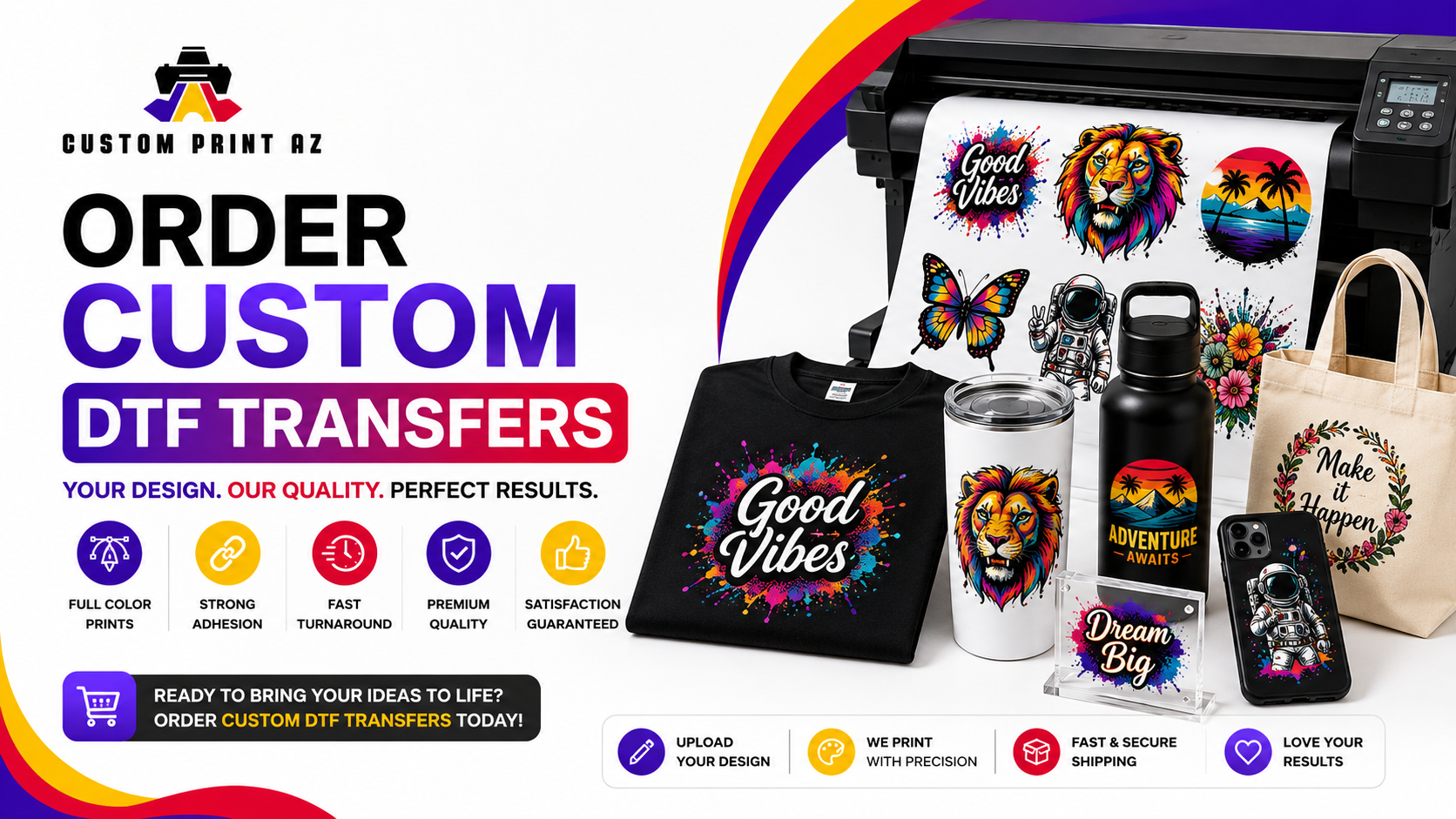
Order Custom DTF Transfers: The Ultimate 2026 Commercial Guide
The global textile decoration market is moving at an unprecedented pace. Traditional screen printing requires extensive physical setup work. Old methodologies often slow down modern business development cycles. Today, smart business operators choose digital agility.
Ordering custom transfers gives your business a huge competitive edge. You can fulfill complex apparel orders instantly. No massive equipment investment is needed. This detailed guide covers how to buy professional transfers successfully.
1. The Shift to Modern Fabric Decoration
Direct-to-film systems utilize advanced digital control technologies. These digital systems drop highly accurate textile inks onto moving plastic sheets. This technological revolution relies heavily on developments in inkjet printing science.
The liquid design receives an even layer of hot-melt powder adhesive. This unique adhesive powder liquefies under precise heat conditions. Once cooled, the image remains perfectly stable on the carrier layer. It stays ready for permanent fabric integration later.
Custom prints eliminate traditional color separation problems entirely. You can print millions of distinct colors effortlessly. Fine photographic details remain extraordinarily sharp and crisp on the fabric. Complex gradient paths blend seamlessly without harsh visual steps.
This method works beautifully across varied product categories. It adheres tightly to light canvas bags. It fits perfectly on thick winter hoodies. It even maintains excellent flexibility on elastic sportswear items.
2. Understanding the Concept of Gang Sheets
Smart print buyers maximize space to minimize expenses. A gang sheet refers to arranging multiple graphic images on a single roll. You fill the entire width and length of the printing area. This layout method lowers the unit price dramatically.
You can mix different logos inside one giant file layout. Combine chest logos, full back designs, and small sleeve branding elements together. This freedom allows you to handle several custom projects simultaneously. It minimizes material waste during large runs.
| Sheet Category | Typical Layout Dimensions | Best Application Use Case |
|---|---|---|
| Single Logo Sheet | 12 inches by 12 inches | Small standalone sampling test projects |
| Medium Gang Roll | 22 inches by 60 inches | Small clothing line launch campaigns |
| Commercial Bulk Roll | 22 inches by 240 inches | High-volume corporate uniform fulfillment jobs |
Always maintain proper spacing between adjacent graphic elements. Leave at least half an inch of empty space between items. This gives you enough room to cut the designs easily with scissors. It prevents accidental damage to neighboring designs.
3. File Specifications for Perfect Ordering
Your physical transfer prints only match the quality of your digital files. Submitting low-resolution internet screenshots causes terrible pixelation issues. Commercial printers require high-end, production-ready digital files.
Ensure your design files utilize a high resolution. Your workspace settings must feature 300 DPI minimum. Vector formats like PDF or SVG are ideal choice options. These file extensions scale endlessly without losing edge sharpness.
You must completely remove all colored background pixels. The printing machinery interprets solid background blocks as part of the artwork. Keep your transparent alpha channels clean and precise. Check your work against a dark contrast layer before saving.
Critical Color Space Warning
Designing files in standard RGB mode can lead to significant color shifts. Commercial print heads operate inside CMYK color spaces. Convert your design color modes prior to final submission to protect accuracy.
4. Selecting Premium Ink and Film Configurations
Not all film manufacturing facilities share identical quality standards. Low-grade suppliers often save money by using cheap white inks. This results in thin, semi-translucent prints on dark clothing items. Premium white ink layers must provide full opacity.
The physical hand-feel of the finished product matters immensely. Elite transfers use ultra-fine adhesive powders for a soft texture. The graphic should blend into the fabric naturally. It should never feel like a thick, rigid plastic sheet stuck to your chest.
To view premium commercial materials firsthand, check out Custom Print AZ. Their production lines maintain excellent consistency for demanding print environments. They focus strictly on industrial-grade output durability.
You can discover their tailored commercial collections directly. Browse their dedicated options for DTF transfers online. This comprehensive collection offers reliable solutions for both small businesses and large enterprises.
5. Step-by-Step Guide to Place Your Order
Placing an online transfer order is a straightforward process. First, finalize your digital gang sheet configuration file. Ensure all embedded image links are fully embedded before exporting.
Navigate directly to the supplier's online uploading portal. Choose the total linear length that matches your production needs. Upload your artwork file into their secure cloud storage engine.
Review the automated online proofing layout screen carefully. Verify your exact physical dimensions one last time. Once confirmed, add the selection to your digital shopping cart. Proceed through the secure checkout phase to launch production.
6. Essential Heat Pressing Parameters
Even premium films can fail if applied incorrectly. You must use a professional heat press machine. Handheld household irons cannot deliver uniform physical pressure across designs. Steady pressure is crucial for permanent adhesive bonding.
Preheat your garment for five seconds before applying the film. This short step removes natural humidity from the fabric fibers. It also flattens out any creases that might distort your design alignment.
Set your equipment temperature according to the manufacturer's directions. Most standard films cure between 285°F and 320°F. Apply heavy physical pressure for twelve continuous seconds. Let the film cool completely if using cold-peel films.
The Post-Press Routine
Always execute a second finishing press for maximum wash durability. Remove the carrier sheet completely first. Cover the exposed design with parchment paper and press again for five seconds. This embeds the ink deep into the textile knit.
7. Maximizing Profit with Smart Ordering Systems
Outsourcing your printing workflow frees up valuable business capital. You no longer need to maintain complex mechanical ink systems. This lets your team focus entirely on sales generation and brand growth.
Order large quantities to unlock wholesale pricing brackets. Bulk pricing structures lower your production costs significantly. This gives you room to offer competitive retail prices to your clients. It boosts your net profit margins over time.
Keep a stock of universal branding logos on hand. Having ready-to-press transfers allows you to fulfill orders instantly. Fast turnaround times keep your customers happy and loyal to your brand.
Scale Your Apparel Production Effortlessly
Stop wasting money on high equipment maintenance overhead. Get crisp, durable, and vibrant commercial-grade prints delivered right to your shop door.
Order your high-resolution designs from Custom Print AZ or check out the premium DTF transfers collection today.
Order Your Custom Transfers Now

