

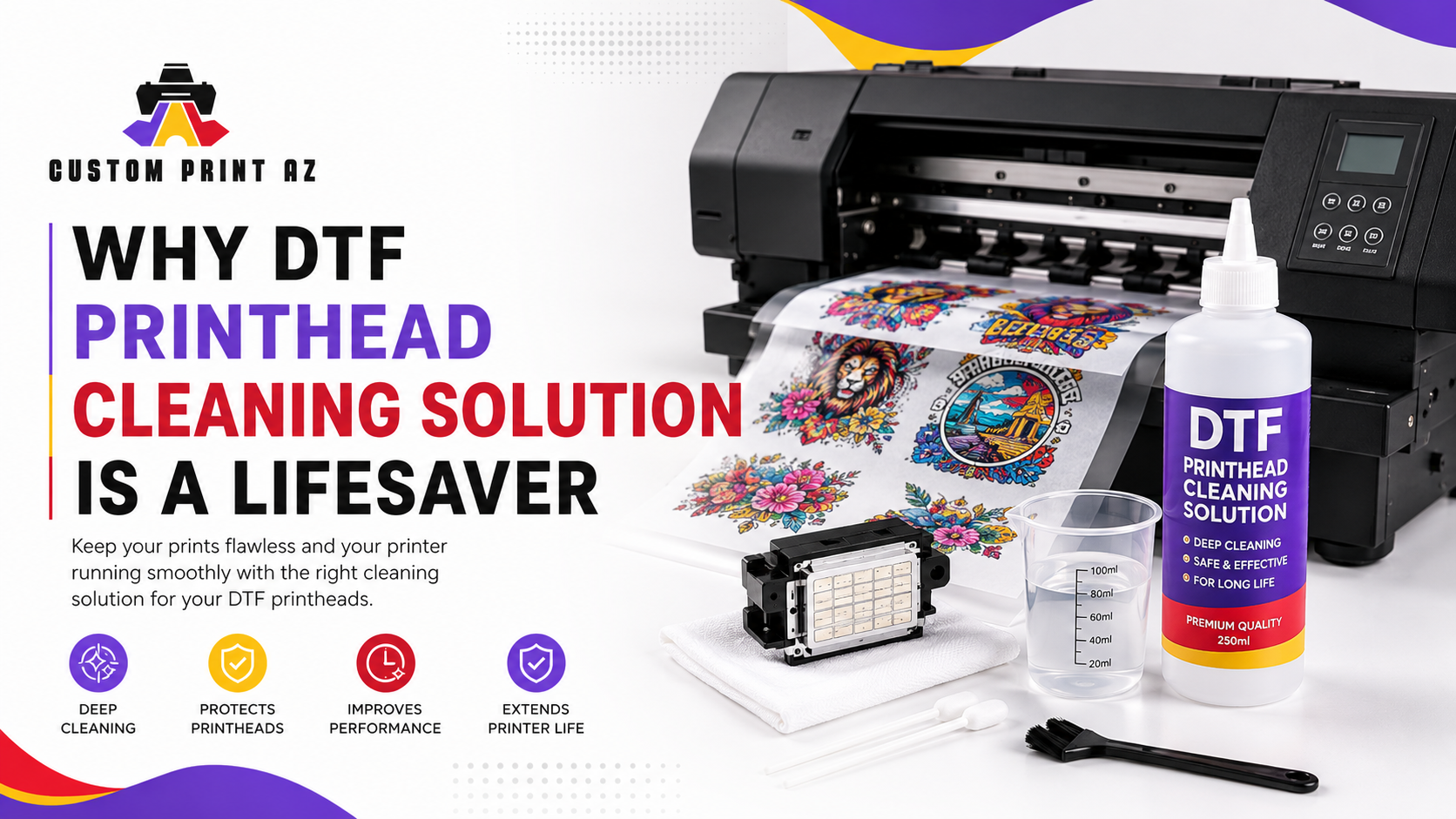
DTF Printhead Cleaning Solution
The world of custom apparel has been revolutionized by Direct-to-Film (DTF) printing. It offers vibrant colors, incredible stretchability, and the ability to print on almost any fabric. However, every DTF printer owner knows there is one silent enemy that can ruin a productive day: the clogged printhead. Because DTF utilizes specialized inks, particularly white ink containing titanium dioxide, the risk of sedimentation and drying is high. This is exactly why having a professional DTF Printhead Cleaning Solution is not just an option—it is a lifesaver for your business.
Maintaining a clean printer is the difference between a successful production run and a costly repair bill. In this guide, we will explore why cleaning solutions are essential, how they work, and the best practices for keeping your equipment in top shape.
The Science of DTF Ink and Why It Clogs
To understand why a cleaning solution is necessary, we must look at the Inkjet Printing process used in DTF. Unlike standard office printers, DTF printers use pigment-based inks that are designed to bond with adhesive powder and fabric.
- The White Ink Challenge: White DTF ink is heavier than other colors. It contains solid particles that provide the opacity needed for dark garments. If the printer sits idle, these particles settle and can create a "plug" in the microscopic nozzles of the Printhead.
- Evaporation: The carrier fluid in the ink is designed to dry quickly once it hits the film. Unfortunately, it can also dry inside the printhead if exposed to air for too long.
- Environmental Factors: Humidity and temperature play a huge role. If your workspace is too dry, the ink inside the nozzles will solidify much faster, leading to missing lines in your prints.
By using a specialized product like our DTF Printhead Cleaning Solution 100 ml, you are using a chemical formula specifically designed to break down these dried pigments without damaging the delicate internal components of the head.
How the Cleaning Solution Works Its Magic
A high-quality cleaning solution is more than just "soapy water." It is a precise chemical balance of Solvents and surfactants. Its primary job is to re-liquefy dried ink so it can be flushed out safely.
When you notice "banding" (horizontal lines across your print) or missing colors during a nozzle check, it means ink has partially or fully blocked the path. Applying the cleaning solution performs three critical tasks:
- Softening: It penetrates the hardened ink crust on the surface of the nozzle plate.
- Dissolving: It breaks the chemical bonds of the dried pigment, turning it back into a liquid state.
- Lubricating: It coats the internal channels to ensure that new ink flows smoothly without creating immediate new clogs.
Regular maintenance with the 100 ml Cleaning Solution ensures that you don't reach the point of "permanent" damage, where the printhead must be replaced entirely.
Best Practices for Printhead Maintenance
Efficiency in a print shop is built on consistency. To ensure your DTF printer stays "healthy," follow these maintenance protocols:
1. The Daily Flush
At the end of each work day, or if you plan to leave the printer idle for more than 24 hours, perform a basic cleaning. A few drops of solution on the capping station (the rubber seal that sits under the printhead) will keep the nozzles moist and prevent them from sealing shut overnight.
2. Deep Cleaning for Stubborn Clogs
If a standard "Head Cleaning" cycle from your software doesn't work, you may need a manual flush. Using a syringe and a small tube, you can gently push the Cleaning Solution through the ink intake needles. Note: Always be gentle; excessive pressure can rupture the internal membranes of the printhead.
3. Capping Station Care
The capping station often collects "gunk" or thick ink residue. If this area is dirty, it won't create a proper vacuum seal, leading to dried-out nozzles. Use a lint-free swab dipped in the cleaning solution to wipe the rubber edges of the cap.
Why the 100 ml Bottle is the Perfect Choice
Many users wonder how much solution they really need. While large jugs are available, the 100 ml bottle is the most popular choice for several reasons:
- Freshness: Cleaning solutions can lose their potency over time if exposed to air repeatedly. A 100 ml bottle is usually used up within a few months of regular maintenance, ensuring the chemicals are always at peak strength.
- Precision: The smaller bottle is easier to handle when filling syringes or applying drops to delicate areas.
- Portability: If you have multiple small workstations, having a dedicated bottle for each printer is more efficient than sharing one large container.
The Real Cost of Neglect
Replacing a printhead for a DTF printer can cost anywhere from $300 to $2,000, depending on the model (such as Epson i3200 or XP600). In contrast, a bottle of cleaning solution costs a tiny fraction of that price.
Neglecting maintenance doesn't just cost money in parts; it costs you time. A clogged printer means missed deadlines, wasted film, and frustrated customers. By spending five minutes a day on maintenance, you protect your investment and ensure that your colors remain crisp and your white ink remains bright.
Conclusion
In the fast-paced world of digital textile printing, your equipment is your most valuable asset. A clogged nozzle shouldn't be the reason your production stops. By understanding the chemistry of your ink and utilizing a professional DTF Printhead Cleaning Solution, you can maintain "like-new" performance for years.
Don't wait for a total blockage to take action. Make cleaning a part of your daily ritual. Your printer, your wallet, and your customers will thank you. Ready to secure your printer's future? Get your maintenance kit started with our Premium Cleaning Solution today.


