

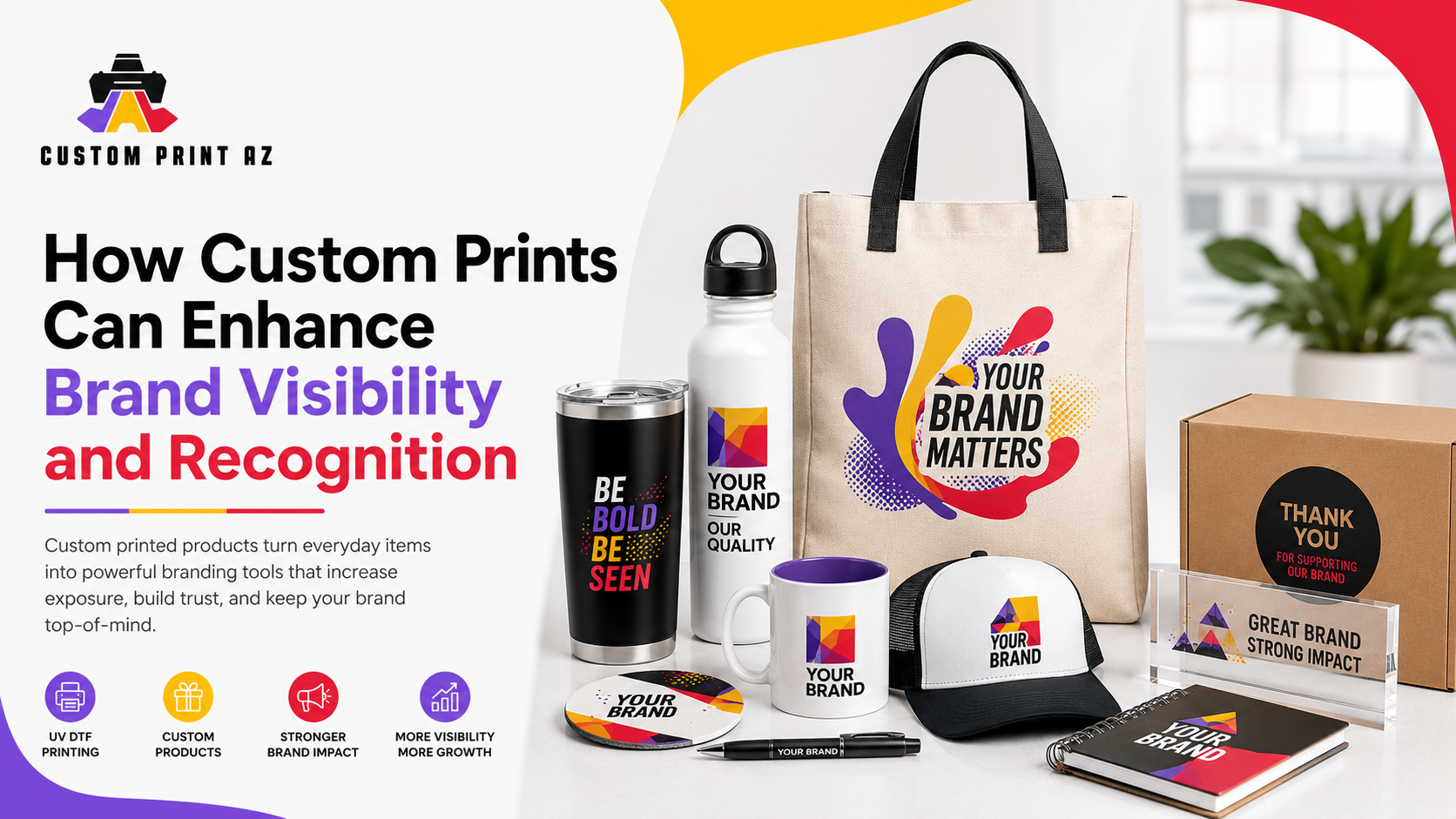
How Custom Prints Can Enhance Brand Visibility and Recognition
Building strong brand visibility is a major challenge in the modern crowded marketplace. Traditional digital ads are becoming increasingly expensive and easy for consumers to ignore online. Because of this, successful businesses are focusing heavily on real-world physical marketing strategies. Custom prints offer a highly tangible and lasting way to capture customer attention today.
Using decorated merchandise turns everyday apparel items into active, moving billboards for your business. Every custom shirt, hoodie, or bag expands your organic brand reach significantly. To achieve great results, you must choose durable printing techniques that look sharp over time. This detailed guide explores how high-quality custom prints can maximize your market recognition.
Brand Visibility Directory
- 1. The Core Psychology of Brand Recognition and Visual Assets
- 2. Transforming Premium Custom Apparel into Walking Mobile Billboards
- 3. Comparing Commercial Print Methods for Maximum Visual Clarity
- 4. Preparing Crisp Vector Graphics for Consistent Brand Reproduction
- 5. Leveraging Direct-to-Film Transfers for High-Volume Corporate Marketing
- 6. Matching Corporate Branding Assets to the Perfect Fabric Bases
- 7. Sourcing Elite Commercial Transfers to Scale Brand Visibility
1. The Core Psychology of Brand Recognition and Visual Assets
Brand recognition depends heavily on consistent visual exposure over extended periods of time. Consumers need to encounter your logo multiple times before they fully trust your business. Physical merchandise provides this constant, subtle exposure more effectively than temporary digital banner ads.
When people interact with high-quality physical products, they form positive brand associations automatically. A premium texture or clean print design communicates corporate professionalism and high attention to detail. This physical touch builds deeper customer relationships that digital marketing channels simply cannot replicate.
To design an effective branding campaign, you must keep your visual assets highly standardized. Your corporate logos, slogans, and color palettes should look exactly the same across all products. You can learn more about the strategic development of global brand management workflows on Wikipedia.
2. Transforming Premium Custom Apparel into Walking Mobile Billboards
Custom-printed apparel acts as a continuous, organic advertising tool for your growing business. When employees or loyal customers wear your branded shirts out in public, they share your logo. This real-world exposure introduces your corporate identity to new potential clients every day.
This organic form of marketing carries a high level of social proof and trust. People naturally trust brands that are actively recommended or worn by real people in their community. This subtle endorsement makes custom merchandise far more credible than standard paid online promotions.
Additionally, giving away printed apparel at corporate events builds strong team unity and excitement. It connects your workers to your brand mission while turning them into proud company ambassadors. This dual benefit makes custom printing an incredibly smart investment for modern organizations.
3. Comparing Commercial Print Methods for Maximum Visual Clarity
Choosing the wrong garment printing technique can result in faded colors and cracked logos. Poor print quality directly harms your professional brand reputation and wastes marketing capital. Let us carefully analyze the primary commercial garment decoration techniques available today.
Traditional screen printing yields thick ink layers but requires high upfront setup fees. Operators must create separate physical stencils for every single color used in your corporate logo. This intensive setup makes short promotional print runs highly expensive for small businesses.
Direct-to-garment digital machines offer fast processing but limit your material decoration options. These systems require applying chemical pretreatments and work well only on 100% natural cotton fabrics. They struggle to deliver bright, vibrant colors on synthetic polyester sports jackets.
4. Preparing Crisp Vector Graphics for Consistent Brand Reproduction
The final physical clarity of your custom prints depends entirely on your digital file preparation. Using low-resolution web images will result in fuzzy, pixelated edges on your finished clothes. Your creative design files must use a sharp resolution of 300 DPI minimum.
Always remove solid background blocks from your design layers before exporting your project files. Faint, uncleaned background pixels will print as noticeable shapes on your dark garments. Use hard masking tools to ensure your design canvas is perfectly transparent.
Maintain a minimum line thickness of 0.02 inches for all fine graphics and font lines. If a design element is too thin, it cannot hold enough adhesive powder during production. This lack of adhesive causes delicate details to peel away during standard wash cycles.
Avoid Overlapping Vector Layouts
Never let the invisible boundary frames of your graphics overlap on your final gang sheet. Overlapping elements can cause errors in automated print queue software. Give every company logo its own clear physical space.
5. Leveraging Direct-to-Film Transfers for High-Volume Corporate Marketing
Direct-to-film printing represents a massive technical leap forward for promotional product marketing. This digital system prints high-resolution graphics onto specialized PET plastic sheets first. An automated machine then applies a uniform layer of hot-melt adhesive powder to the ink.
This advanced technique allows you to pack multiple unique client designs onto a single film roll. You can easily combine pocket logos, sleeve accents, and large back graphics together. This high-density layout approach eliminates material waste and drops production costs significantly.
The Efficiency of On-Demand Branding
Using digital film sheets allows your company to manage marketing items with zero pre-printed inventory waste. You order custom transfers in advance and store them safely in compact flat boxes. You heat-press the graphics onto blank garments only as needed.
6. Matching Corporate Branding Assets to the Perfect Fabric Bases
Different apparel materials require specific print handling to ensure long-lasting durability. To maximize your brand visibility, you must match your graphics to the right fabric substrates. Let us look at how common promotional clothing materials behave during production.
| Promotional Item Base | Recommended Printing Method | Primary Finish Challenge |
|---|---|---|
| Premium Combed Cotton Tees | Direct-to-Garment / Film Transfers | Surface fibers lifting through thin ink layers |
| Polyester Athletic Jerseys | Dye Sublimation / Film Sheets | Dye migration changing light logo colors |
| Heavy Canvas Event Totes | Industrial Film Transfer Sheets | Thick seams interfering with flat press plates |
| Nylon Corporate Windbreakers | Low-Temperature Specialty Films | Waterproof coatings rejecting adhesive bonds |
Analyze your target audience carefully before selecting your promotional product materials. Choosing a universal printing technique allows you to decorate different clothing items consistently. This uniformity keeps your corporate branding clean, sharp, and highly professional.
7. Sourcing Elite Commercial Transfers to Scale Brand Visibility
Executing a successful corporate branding campaign requires a highly reliable production partner. Sourcing from a premier print house ensures beautiful colors and exceptional wash durability. Look for a team that utilizes industrial-grade systems for every single run.
We highly suggest working with the digital garment specialists at Custom Print AZ. Their advanced production hub maintains strict quality benchmarks for every order. They make uploading your custom artwork files simple, straightforward, and fast.
You can browse their specialized print options directly from your browser. Explore their commercial catalog of high-durability DTF transfers online. This flexible system handles small custom family projects and large corporate apparel runs with equal precision.
Partnering with an industry leader streamlines your apparel manufacturing workflow perfectly. It eliminates the high cost of buying machinery and dealing with daily printhead maintenance. It leaves you free to focus entirely on building your custom apparel brand and connecting with your audience.


