

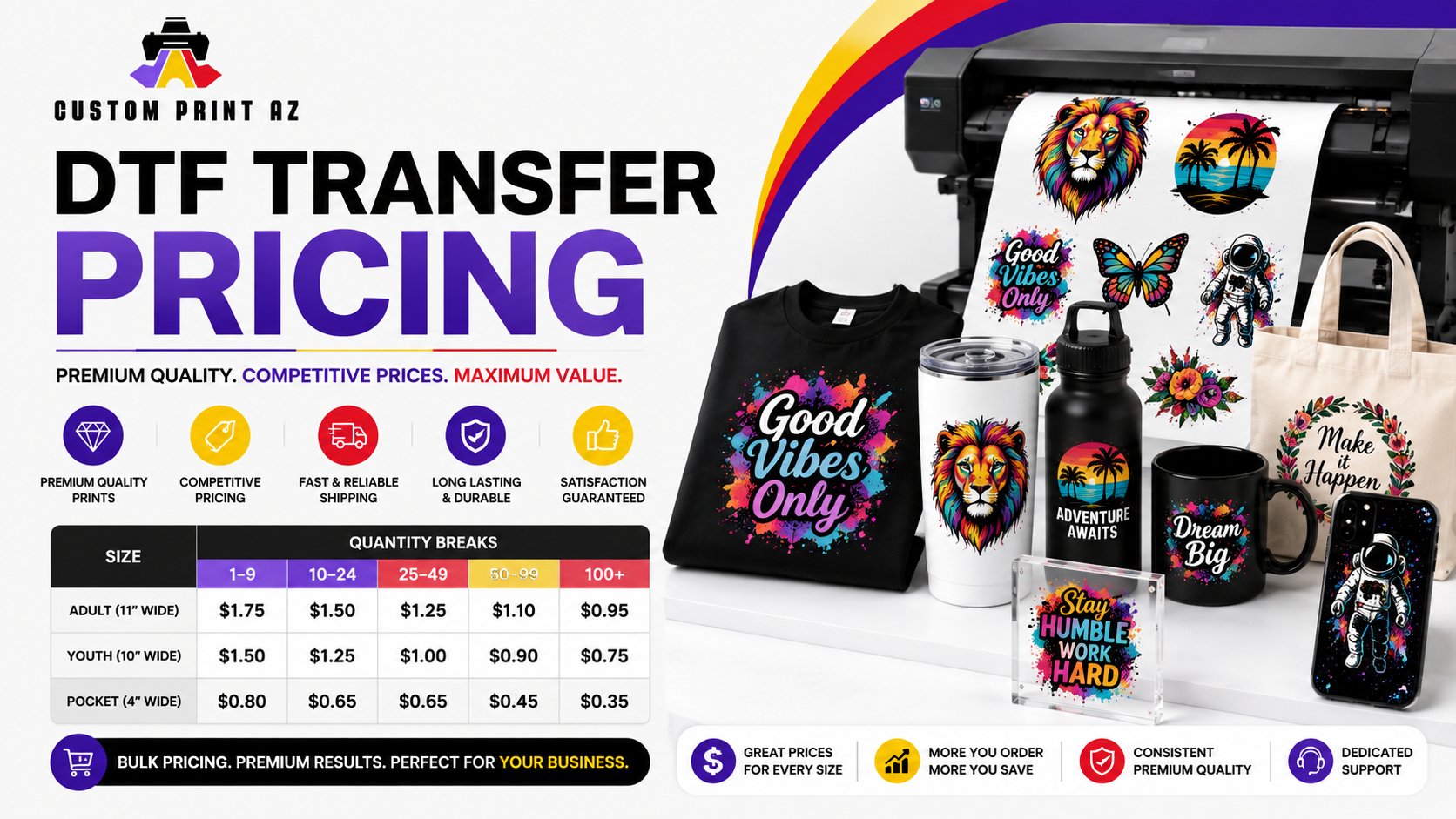
DTF Transfer Pricing: The Ultimate 2026 Commercial Cost Guide
Navigating the economics of apparel custom production requires careful budget planning. Printing costs affect your net profit margins directly. Choosing the right decoration method alters your financial success strategy. Modern commercial systems offer outstanding cost-to-benefit ratios.
Direct-to-film technology has revolutionized small-batch manufacturing costs completely. It removes the steep setup fees associated with old-school methods. However, understanding general market pricing structures can feel confusing. This in-depth analysis breaks down print budgeting transparently.
Pricing Guide Directory
- 1. Standard Commercial Pricing Models Explained
- 2. The Financial Logic of Buying Gang Sheets
- 3. Key Hidden Variables Influencing Total Price
- 4. Calculating Costs: In-House Production vs. Outsourcing
- 5. Why Extremely Low Prices Can Damage Profits
- 6. Practical Strategies to Lower Sourcing Costs
- 7. Sourcing Reliable Premium Transfer Films
1. Standard Commercial Pricing Models Explained
Commercial suppliers typically balance pricing calculations using two main systems. They sell transfers either by individual image cutouts or by total roll length. Understanding these two systems prevents costly budgeting errors.
Individual cut pricing calculates fees based on strict width and height measurements. This method serves small creators who need minimal logo quantities. The approach utilizes traditional square-inch math parameters common in the digital printing industry.
Conversely, industrial scale operations prioritize continuous linear roll volume measurements. They sell space across fixed widths like twenty-two inches wide. You pay directly for the total running length utilized.
Linear pricing lowers your overall unit cost dynamically as production increases. It rewards clean organization and tightly packed file formats. This is why growing garment brands scale using bulk film processing.
2. The Financial Logic of Buying Gang Sheets
Gang sheets represent the ultimate method for cutting apparel decoration expenses. A gang sheet consolidates separate creative projects onto one production layout. This maximizes output while eliminating wasted margins.
Suppliers offer massive tier discounts when you order longer continuous sheets. For example, a single five-foot sheet carries a standard base price rate. Buying a fifty-foot bulk roll slashes the per-foot cost drastically.
| Order Length Bracket | Average Price Per Linear Foot | Target Production Profile |
|---|---|---|
| 1 to 5 Feet | $6.50 – $8.50 | Prototyping and custom gift projects |
| 6 to 20 Feet | $5.00 – $6.25 | Small business apparel line launches |
| 21 to 100 Feet | $4.00 – $4.75 | Corporate uniform fulfillment jobs |
| 100+ Feet Bulk | $3.25 – $3.85 | Industrial merchandise scaling |
The financial math shows clear compounding advantages for busy print operators. Packing your files efficiently increases your total net profits on every shirt. It changes how you estimate custom project margins.
3. Key Hidden Variables Influencing Total Price
Base material metrics are not the only things driving final customer invoice totals. File processing errors often generate unexpected manual service upcharges. Always ensure your design files adhere strictly to supplier guidelines.
Artwork resolution affects system automated preflight checking significantly. Low-resolution images require extensive manual rebuilding by design technicians. Shops charge hourly graphics fees to fix blurry, unpressable files.
Shipping logistics also affect real-world transfer prices heavily. Heavy film shipments require sturdy protective cardboard tubes to arrive safely. Choosing rush production delivery options can double your baseline transportation expenses.
The Rush Processing Variable
Standard order processing turnarounds span twenty-four to forty-eight production hours. Same-day emergency printing services usually add a thirty to fifty percent price premium. Planning production timelines early saves money.
4. Calculating Costs: In-House Production vs. Outsourcing
Many business owners dream of buying commercial printers to control production. However, raw machinery purchase figures only represent part of the actual cost. You must calculate daily operational overhead accurately.
Commercial printer setups demand constant workspace climate management. Running printhead maintenance routines daily consumes expensive specialty ink. If machines sit idle for weeks, precision printheads can clog permanently.
Outsourcing transfers converts fixed machinery liabilities into clean, predictable variable costs. You pay exclusively for materials you intend to sell immediately. It removes the stress of equipment breakdowns entirely.
5. Why Extremely Low Prices Can Damage Profits
The online printing marketplace features intense price competition among vendors. Ultra-low prices often signal compromised raw material ingredients. Cheap components yield brittle, substandard final products.
Low-grade factories reduce costs by diluting white ink pigments. This creates thin ink deposits that allow shirt dyes to bleed through. Your bright white logos can turn a muddy gray after one laundry wash cycle.
Poorly formulated adhesive powders fail to bond correctly with synthetic fabrics. The graphic can crack or peel off the shirt during standard washing. Replacing ruined customer garments destroys your target profit margins quickly.
The Real Price of Client Claims
Saving twenty dollars on a cheap film roll is not worth the risk. A single batch of peeling shirts can destroy your local business reputation completely. Prioritize certified premium materials for stable growth.
6. Practical Strategies to Lower Sourcing Costs
You can optimize your sourcing workflow without sacrificing product quality. First, design your primary logo assets inside clean vector environments. Vector graphics simplify layout arrangements and fit together tightly.
Second, combine multiple client orders onto a single long roll submission. Consolidating short jobs unlocks bulk tiered pricing brackets easily. This strategy allows you to pocket the cost difference as clean profit.
Finally, establish an ongoing partnership with a dedicated premium supplier. Trusted suppliers offer loyalty rewards and consistent shipping rates. This reliability makes your business planning simple and predictable.
7. Sourcing Reliable Premium Transfer Films
Finding a consistent, high-end production vendor is vital for your print shop. You need a partner that combines commercial-grade stability with transparent bulk pricing scales.
We highly recommend assessing the digital production services at Custom Print AZ. They maintain advanced equipment arrays to ensure precise color registration. Their raw material sourcing satisfies rigorous wash durability standards.
You can review their direct retail price frameworks seamlessly online. Explore their high-speed fulfillment solutions for DTF transfers. This commercial collection handles both small boutique projects and massive enterprise operations.
Using an expert fulfillment house lets you scale your business safely. You can accept large orders confidently without worrying about machine limitations. It keeps your operational expenses clear and predictable.
Optimize Your Apparel Production Budget Today
Stop overpaying for low-yield separate cutouts. Switch to high-efficiency, commercial-grade gang rolls and maximize your true shop profitability.
Partner with Custom Print AZ and explore the professional, budget-friendly DTF transfers collection now.
View wholesale Roll Pricing

