

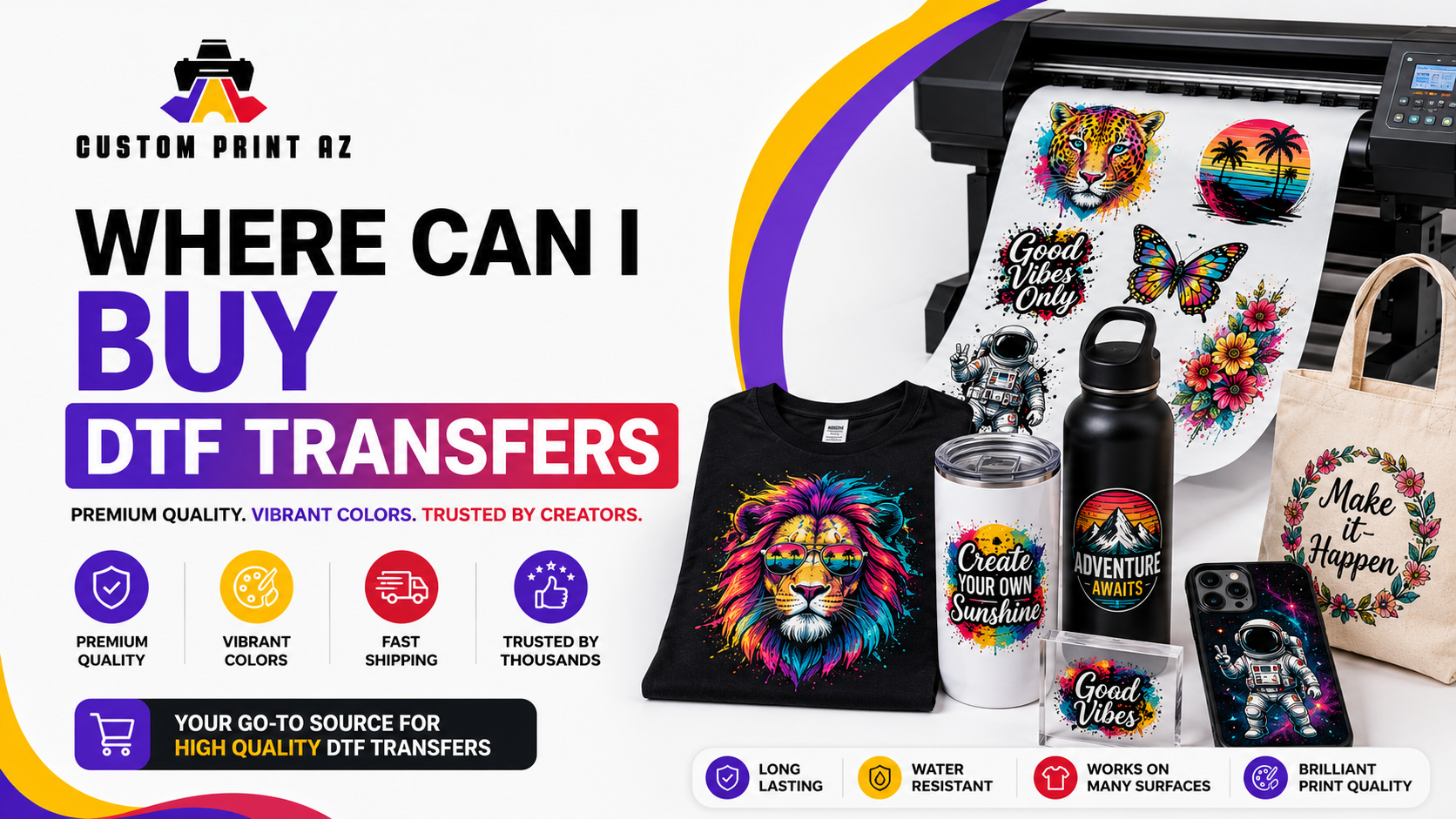
Where Can I Buy DTF Transfers? The Ultimate 2026 Buying Guide
The apparel decoration industry is changing fast. Custom apparel decoration relies heavily on modern printing methods. Direct-to-film technology leads this massive transformation. Finding the right supplier can determine your business success.
Many print shops face the same difficult question. Where can I buy DTF transfers that offer premium quality? This extensive guide covers everything you need to know. We will explore top sources, quality metrics, and ordering processes.
Table of Contents
1. Understanding DTF Technology
Direct-to-film printing utilizes specialized digital inkjet technology. Printers apply unique textile inks directly onto a clear PET carrier film. A hot-melt adhesive powder is applied next. The powder fuses to the wet ink through heat curing.
This method differs significantly from older garment decoration techniques. It bypasses the traditional screen creation process entirely. You do not need complex pretreatments like direct-to-garment printing requires. Learn more about direct-to-film printing on Wikipedia.
The technology offers remarkable versatility for diverse fabric options. It adheres beautifully to standard cotton blends. It works perfectly on slick synthetic polyesters. It even applies smoothly to tough nylon surfaces.
Modern commercial printers use advanced printheads for exceptional resolution. They produce incredibly vibrant color gamuts. The final prints stretch cleanly without cracking or showing distortion. This makes the method ideal for activewear brands.
2. Why Source Professional Transfers?
Buying commercial equipment requires substantial capital investment. Commercial machinery creates high overhead costs for small shops. Sourcing pre-printed transfers provides an efficient financial alternative. It lowers entry barriers for new apparel brands.
Professional suppliers use industrial-grade production setups. They maintain strict climate-controlled printing environments. This consistency guarantees flawless ink curing cycles. Your business gains access to industrial output without the physical maintenance hassle.
Sourcing ready-to-press films streamlines your entire workflow. You simply upload your digital artwork online. The supplier prints, powders, and ships the physical sheets. Your team focuses purely on heat pressing and customer marketing.
This business model scales your production effortlessly. You can handle small custom orders comfortably. You can also accept massive corporate orders without production bottlenecks. It optimizes your overall operational efficiency.
The Efficiency of Outsourcing
Outsourcing allows apparel decorators to offer unlimited colors. You can fulfill orders without cleaning screens or maintaining expensive printheads daily. It saves valuable time and labor budget.
3. Where to Buy Premium DTF Transfers
Choosing a reliable supplier remains your most critical decision. The online marketplace contains many low-quality print operations. You need a trusted partner focused on commercial excellence.
We highly recommend visiting the comprehensive catalog at Custom Print AZ. They specialize in high-resolution, durable custom film prints. Their production system utilizes premium raw materials for lasting results.
You can browse their specific commercial collections directly. Check out their dedicated options for DTF transfers online. This collection serves both independent designers and high-volume apparel businesses.
| Supplier Type | Pros | Cons |
|---|---|---|
| Specialized US Print Shops | Fast shipping, premium quality, great support | Higher initial base price |
| Overseas Hubs | Very low unit costs | Long shipping times, poor quality control |
| Local Printers | Local pickup options | Limited production capacity |
Dedicated domestic suppliers consistently provide superior color management. They understand specific local market quality expectations. Their customer support agents handle file preparation questions accurately and promptly.
4. How to Evaluate Transfer Vendors
Never choose a supplier based purely on the lowest price. Low prices often mean cheap inks and brittle adhesive powders. Look carefully at the specific materials the shop uses.
Order a sample pack before committing to large jobs. Test the sample prints on different fabric types. Check the overall opacity of the white ink layer. The white layer must block the garment color completely.
Key Factors to Assess:
- Stretchability: The cured design must stretch naturally with the fabric.
- Washability: Prints should survive over fifty laundering cycles without fading.
- Turnaround Time: Fast shipping keeps your customers satisfied.
- Software Infrastructure: Easy online builders simplify your file uploading process.
Review the supplier's specific artwork file guidelines closely. Excellent vendors accept vector formats like PDF or SVG. They also accept high-resolution raster files with transparent backgrounds. Clear file instruction prevents unexpected printing errors.
5. Common Buying Mistakes to Avoid
Many beginners upload low-resolution web images for printing. Pixels become highly visible when enlarged onto garments. Always use artwork created at 300 DPI minimum. This ensures clean, sharp design edges.
Ignoring correct color profiles can create disappointing final prints. Printers use CMYK color spaces to generate physical colors. Designing in RGB spaces can cause unexpected color shifts. Convert your artwork files before submission.
Forgetting to verify transparency settings causes ruined prints. Tiny stray pixels can capture white backing ink accidentally. Clean your design edges thoroughly using reliable photo editing software. Inspect your artwork backgrounds at high zoom levels.
6. Application Best Practices
Even premium transfers can fail if applied incorrectly. You must use a professional-grade heat press machine. Manual home irons cannot deliver sufficient, uniform physical pressure. Consistent heat and heavy pressure are essential.
Follow the manufacturer's exact recommended temperature settings. Most standard formulations cure between 285°F and 320°F. Press the garment for twelve to fifteen seconds. Let the film cool completely if using cold-peel varieties.
Always perform a second finishing press for maximum durability. Cover the exposed design with parchment paper or a silicone sheet. Press again firmly for about five seconds. This embeds the ink deeply into the textile fibers.
Ready to Elevate Your Apparel Brand?
Stop settling for low-quality prints that crack and fade. Source your commercial-grade designs from trusted industry experts today.
Explore premium options at Custom Print AZ or check out the full DTF transfers collection now.
Shop Premium Transfers Now

