

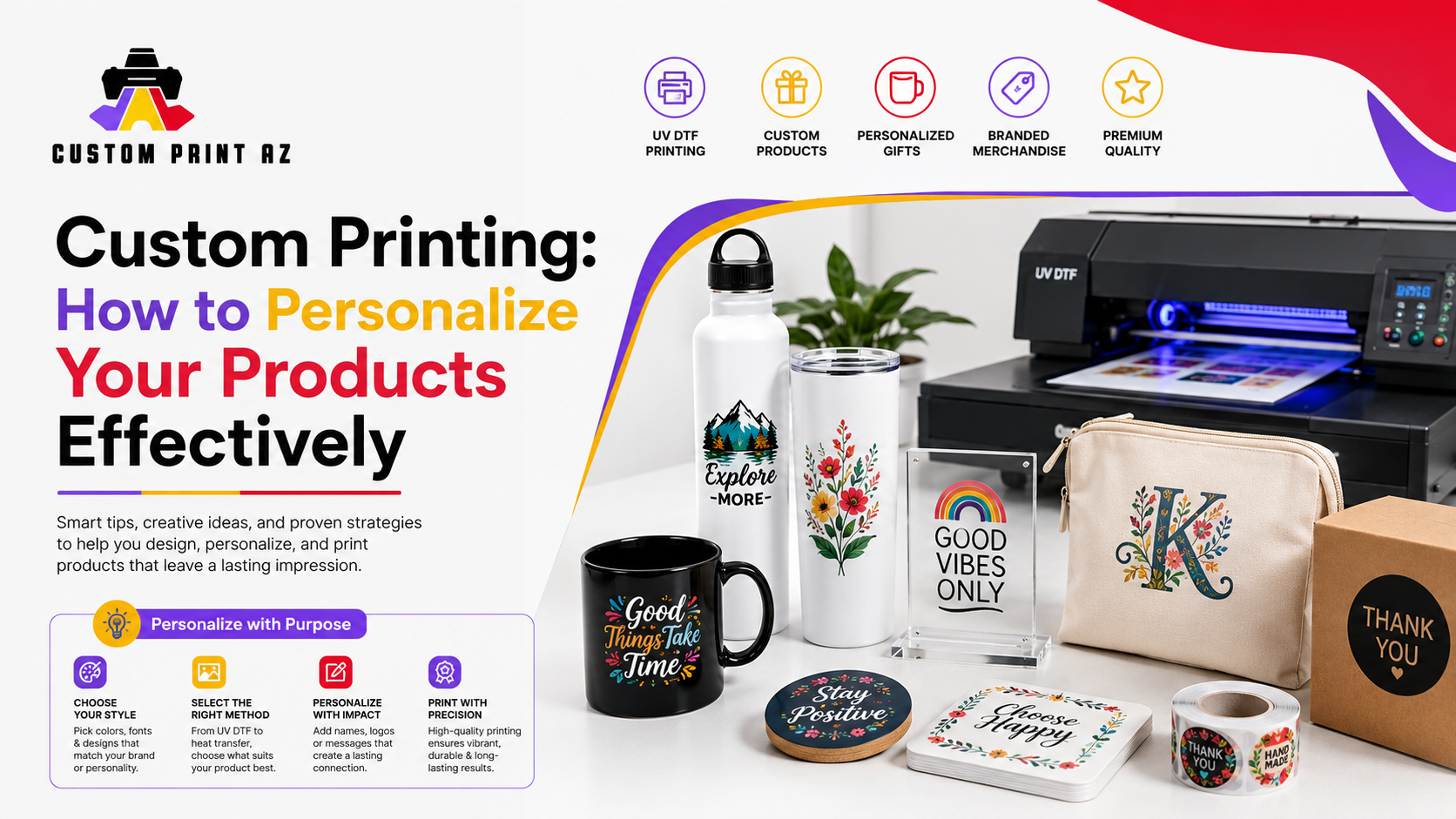
Custom Printing: How to Personalize Your Products Effectively
Product personalization has quickly shifted from a simple market trend into a permanent business foundation. Today, global consumers actively reject generic mass-produced goods. They want unique items that tell a personal story or reflect their current lifestyle choices. This shift forces modern brands to adapt their production systems rapidly.
Launching a successful personalization campaign requires more than just adding a random text field to your website. You must synchronize digital graphic systems with precise industrial manufacturing workflows. Choosing high-quality printing processes keeps your inventory agile while maximizing profit margins. This detailed guide explores how to build a highly effective custom personalization model.
Comprehensive Content Outline
- 1. Understanding the Psychology of Product Personalization
- 2. Preparing Flawless Digital Graphics for Clean Custom Printing
- 3. Evaluating Modern Custom Printing Machinery and Methods
- 4. Matching Creative Artwork to the Right Fabric Substrates
- 5. Streamlining Business Inventory Using Direct-to-Film Transfers
- 6. Establishing Operational Benchmarks for Corporate Clients
- 7. Sourcing Premium Commercial Transfers from Elite Suppliers
1. Understanding the Psychology of Product Personalization
Modern buyers are looking for deeper psychological connections with the consumer goods they purchase. Personalization makes an item unique, turning a standard commodity into a valuable personal keepsake. This emotional connection increases brand loyalty and motivates customers to share products online.
When consumers design an item themselves, they invest their personal time and creativity into the product. This behavioral concept means shoppers place a higher financial value on custom merchandise. Businesses can leverage this loyalty to improve profit margins while reducing customer acquisition costs.
To capture this value, your business must offer an effortless, error-free customization experience. The digital design tools on your storefront must feel intuitive and simple to use. Learn more about the modern industrial history of product mass customization on Wikipedia for professional background insights.
2. Preparing Flawless Digital Graphics for Clean Custom Printing
The final physical quality of your custom products depends completely on your digital artwork setup. Using low-resolution graphics from web searches leads to blurry, pixelated edges. Your digital artboards must use a setting of 300 dots per inch minimum to ensure crisp lines.
Clear away solid background blocks from your design layers before exporting your project files. Any lingering background pixels will print as solid shapes on your apparel. Use hard masking tools to ensure your canvas background is entirely transparent.
Maintain a minimum line thickness of 0.02 inches for all fine graphics and font lines. If a design element is too thin, it cannot hold enough adhesive powder during production. This lack of adhesive causes delicate details to peel away during standard wash cycles.
Pro-Tip: Avoid Web Image Compression
Never use compressed file formats for commercial production runs. Formats like JPEG introduce faint artifacts around sharp design lines. Stick to high-resolution PNG or vector files to preserve clean artwork borders.
3. Evaluating Modern Custom Printing Machinery and Methods
Selecting the wrong printing method can lead to dull colors and poor wash durability. Your business model must align with the mechanical strengths of your printing equipment. Let us analyze the primary printing technologies used in the custom apparel industry.
Traditional screen printing requires long manual setup times to build individual physical stencil screens. This labor-intensive setup forces commercial print shops to require high minimum orders. It makes short production runs highly impractical for testing new streetwear collections.
Direct-to-garment digital systems eliminate physical stencils but introduce strict material limitations. These inkjet machines require pre-treating fabrics with liquid chemicals to keep colors bright. This process limits production to natural cotton garments and performs poorly on polyester activewear.
4. Matching Creative Artwork to the Right Fabric Substrates
Every raw material type behaves differently when exposed to physical inks and thermal energy. A gorgeous graphic file will look terrible if applied to incompatible fabrics. You must select the ideal printing method for your specific product materials.
| Product Material Base | Optimal Custom Printing Technology | Primary Finish Challenge |
|---|---|---|
| 100% Organic Ring-Spun Cotton | Direct-to-Garment / Digital Film Sheet Transfers | Fiber fuzz lifting through wet ink blocks |
| Performance Synthetic Polyester | Dye Sublimation Vapor / Direct-to-Film Rolls | Dye migration changing light ink colors |
| Heavy Canvas Bags / Rigid Denim | Industrial Direct-to-Film Transfer Sheets | Uneven texture seams disrupting flat pressure |
| Waterproof Coated Rain Nylon | Low-Temperature Film Sheets / Screen Ink Layers | Chemical coatings resisting adhesive bonds |
Analyze your product lines thoroughly before launching online marketing campaigns. Settle on a universal transfer method if you plan to decorate multiple fabric types. This choice keeps your internal production loops incredibly clean and predictable.
5. Streamlining Business Inventory Using Direct-to-Film Transfers
Direct-to-film printing represents a massive breakthrough for growing e-commerce brands. The advanced system prints high-resolution graphics onto specialized PET plastic sheets first. An automated system then applies a thin, uniform layer of hot-melt adhesive powder.
This method allows you to combine multiple customer logos onto a single printing roll. You can pack dozens of completely different custom designs onto a single long film roll. This high-density layout strategy eliminates material waste and drops production costs dramatically.
The Power of On-Demand Inventory
Using digital film sheets allows your business to function with zero pre-printed inventory. You buy custom transfers in advance and store them safely in compact flat boxes. You heat-press the graphics onto blank apparel only after customers buy from your store.
6. Establishing Operational Benchmarks for Corporate Clients
Expanding your personalized product catalog requires strict color and design rules. Corporate clients expect their official logo colors to match perfectly across shirts, hats, and bags. Even tiny color variations can damage your professional reputation.
Store your approved vector files in secure cloud storage with clear size labels. Standardize your heat press machine application settings for every fabric type you offer. Controlling temperature, time, and pressure precisely ensures beautiful results on every order.
7. Sourcing Premium Commercial Transfers from Elite Suppliers
Bringing your custom personalization projects to life requires a reliable manufacturing partner. Sourcing from a premier print house ensures beautiful colors and exceptional wash durability. Look for a team that utilizes industrial-grade systems for every single run.
We highly suggest working with the digital garment specialists at Custom Print AZ. Their advanced production hub maintains strict quality benchmarks for every order. They make uploading your custom artwork files simple, straightforward, and fast.
You can browse their specialized print options directly from your browser. Explore their commercial catalog of high-durability DTF transfers online. This flexible system handles small custom family projects and large corporate apparel runs with equal precision.
Partnering with an industry leader streamlines your apparel manufacturing workflow perfectly. It eliminates the high cost of buying machinery and dealing with daily printhead maintenance. It leaves you free to focus entirely on building your custom apparel brand and connecting with your audience.
Scale Your Custom Personalization Business Effortlessly
Stop risking your brand reputation with low-quality prints that crack, peel, and fade quickly. Switch to industrial-grade, production-ready custom gang sheets and decorate any fabric style with absolute confidence today.
Partner with Custom Print AZ and view the professional DTF transfers collection now.
Order Your Custom Transfers Now

